


If you are trying to decide between Flodesk vs Kit for your email marketing, you are in the right place. I have used both of these platforms. Not just tested them briefly, but actually built my email marketing on each of them, switched from one to the other, and eventually came back. So when I tell you this comparison is based on real experience, I mean it.
If you are a service business owner trying to figure out which email marketing tool is actually worth your time and money, this is the comparison you need. No generic takes. Just what I actually found after using both.
What Is Flodesk?
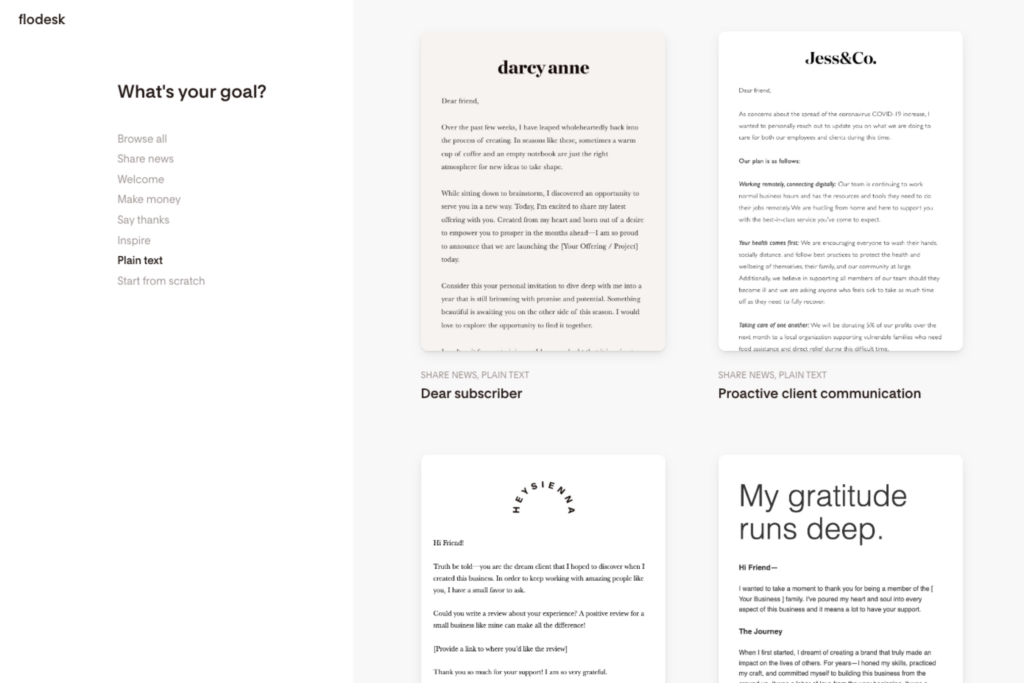
Flodesk is an email marketing platform built specifically for small business owners and creatives who want beautiful emails without needing a design background. It launched in 2019 and quickly became popular because of its flat pricing model and genuinely stunning templates.
What makes Flodesk different is that your monthly price stays the same no matter how many subscribers you have. That is a significant advantage when most platforms charge more as your list grows.
Best for: Service business owners, creatives, coaches, and online business owners who want polished on-brand emails without spending hours designing them.
What Is Kit?
Kit, formerly known as ConvertKit, is an email marketing and creator platform built around automations, sequences, and list segmentation. It has been around since 2013 and is widely used by bloggers, course creators, and content-heavy businesses.
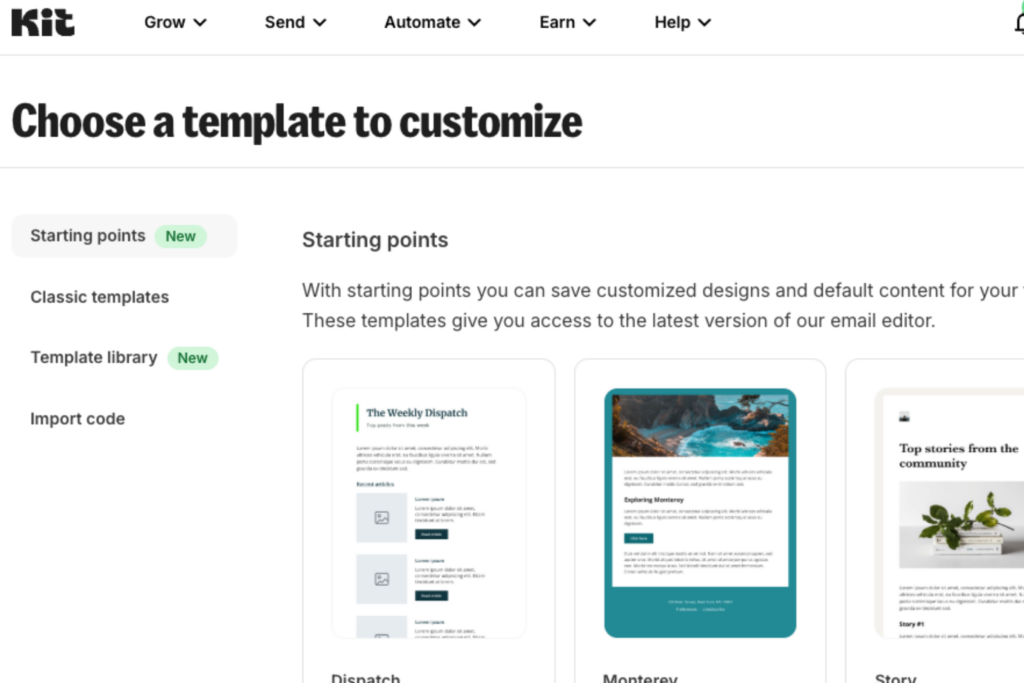
Kit is built for people who want granular control over their automations and subscriber tagging. The interface is more technical than Flodesk but also more powerful in terms of what you can build.
Best for: Content creators, course sellers, and businesses with complex email funnels that need advanced segmentation and automation logic.
Flodesk vs Kit: The Real Comparison
Design and Templates
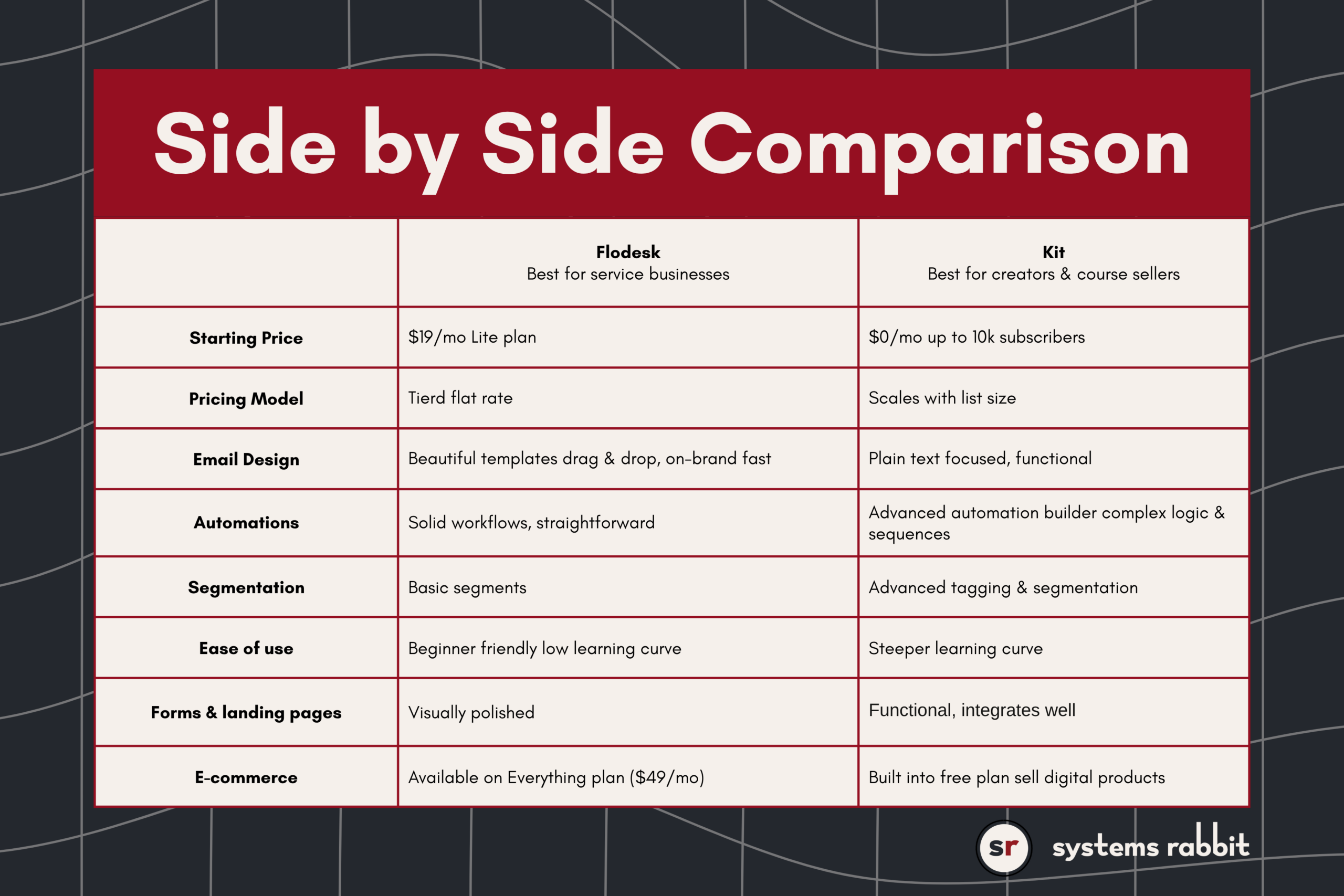
Flodesk wins here without question. The templates are genuinely beautiful and the drag and drop editor is intuitive enough that you can build a professional looking email in under 30 minutes. Kit’s emails are more plain text focused. They are clean and professional but not visually impressive.
If your brand identity and visual presentation matter to you, Flodesk is the clear choice.
Automations and Sequences
Kit wins here. The automation builder in Kit is more robust, more flexible, and more logic-driven than Flodesk. If you want to build complex funnels with multiple entry points, conditional logic, and advanced tagging, Kit gives you more to work with.
Flodesk has workflows and they work well for straightforward sequences. But if you are building something highly segmented and automated, Kit has more horsepower.
Pricing
Flodesk: Three tiers starting at $19 per month for the Lite plan which includes unlimited email sends and up to 25,000 subscribers. The Pro plan is $25 per month and adds unlimited workflows and advanced analytics. The Everything plan is $49 per month and includes e-commerce features like sales pages, checkouts, subscriptions, and abandoned cart automations. A free plan is available with limited features to get started.
Kit: Three tiers starting with a free Newsletter plan for up to 10,000 subscribers with basic features including one automation, unlimited landing pages and forms, and audience tagging. The Creator plan is $39 per month for up to 1,000 subscribers and adds unlimited automations, email sequences, A/B testing, and removes Kit branding. The Pro plan is $79 per month and adds an insights dashboard, subscriber engagement scoring, collaborative editing, and Facebook custom audiences. Pricing increases as your subscriber count grows.
For service businesses in the early to mid growth stage, Flodesk’s Pro plan at $25 per month is hard to beat. Kit’s free plan is a legitimate starting point if you need time to test before committing, but costs climb quickly once you need the features that matter.
Ease of Use
Flodesk is more beginner friendly. The interface is clean, the learning curve is low, and you can get up and running quickly. Kit has a steeper learning curve but the investment pays off if you need its more advanced features.
Forms and Landing Pages
Both platforms have opt-in forms and landing pages. Flodesk’s are more visually polished. Kit’s are more functional and easier to integrate with complex automation logic.
Segmentation
Kit is stronger here. The tagging and segmentation system in Kit is one of its best features. Flodesk has segments but they are more basic by comparison.
Why I Switched From Flodesk to Kit
When I first moved to Kit I was chasing the automation capabilities. I wanted more control over my sequences and the ability to build more complex funnels. Kit delivered on that. The automations worked well and the segmentation was exactly what I needed at the time.
But I found myself spending a significant amount of time on the design side of things. My emails looked functional but not great. And for a business where brand presentation matters, that started to feel like a real problem.
Why I Switched Back to Flodesk
I came back to Flodesk because the combination of pricing, beautiful design, and sufficient automation capability was the right fit for where my business actually is.
The workflows in Flodesk handled everything I needed. The emails looked exactly the way I wanted them to look. And I stopped dreading the design process every time I sat down to write a campaign.
For my business and my clients, Flodesk is the better fit. That does not mean it will be for everyone.
Which One Should You Choose?
Choose Flodesk If:
You want beautiful on-brand emails without a design background. Your list is growing and you want predictable pricing that does not punish you for it. You need solid automation but not highly complex funnels. You want to get up and running quickly without a steep learning curve.
Choose Kit If:
You are a content creator or course seller with complex funnel needs. You need advanced tagging, segmentation, and automation logic. You are comfortable with a more technical interface. You want a free plan to start before committing.
The Bottom Line
Both platforms are legitimate and both have real strengths. The right choice depends entirely on where your business is and what you actually need from your email marketing.
If you are a service business owner who wants professional, beautiful emails and predictable pricing, Flodesk is likely your better fit. If you are running a content-heavy operation with complex automation needs, Kit is worth the learning curve.
Ready to Get Your Email Marketing Actually Set Up?
Choosing the platform is step one. Setting it up in a way that actually works for your business is a different challenge entirely. If you have the tool but have not fully built out your sequences, your segments, or your automations, that is exactly the kind of thing we help with at Systems Rabbit.
We set up and optimize email marketing systems for growing businesses so you can focus on using them instead of figuring them out.
Contact us to talk about your email marketing setup.